
You’re writing a report on screen time, and you type “average phone useage.” The word looks almost right. You stare at it, add the extra “e,” then take it out again.
If that sounds familiar, you’re not alone. People searching usage or useage usually want to know which spelling is correct, why the “e” seems to belong there, and how usage differs from the word “use.”
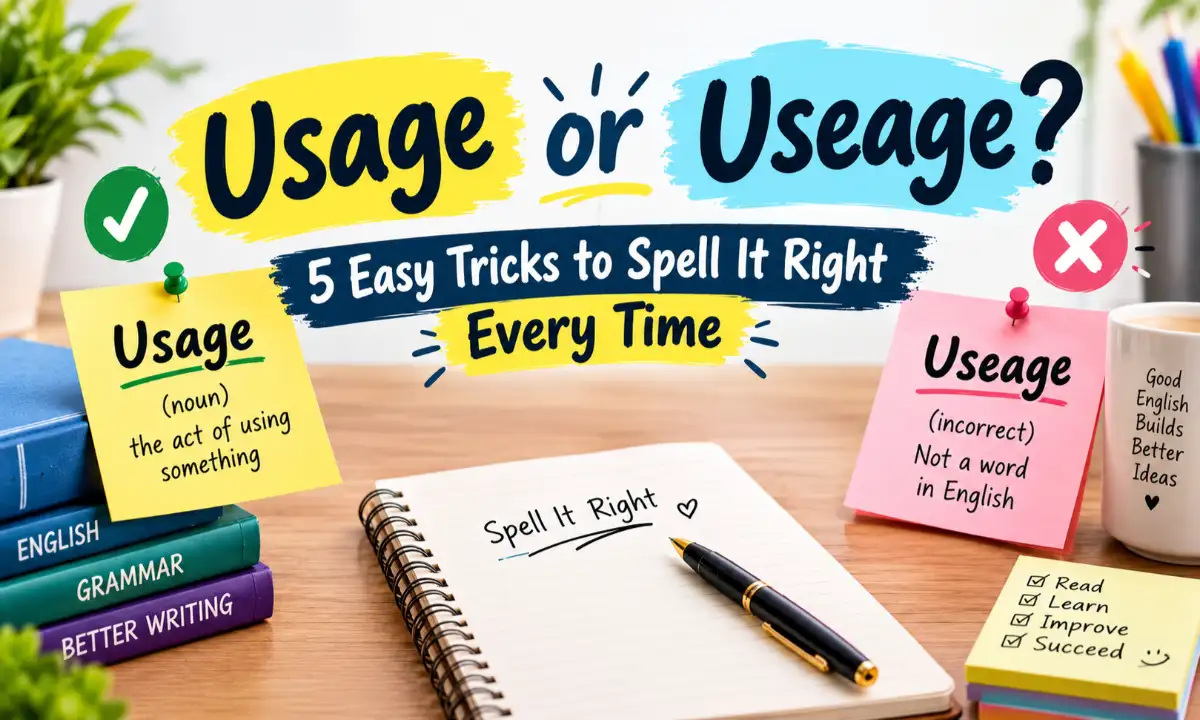
The short answer is usage. In this guide, you’ll learn why, what the word means, and 5 easy tricks to spell it right every time.
Written by Toseef Mustafa, MA English, English Grammar Specialist with 5 years of experience | Last updated: October 2026
From my experience: In my 5 years of explaining grammar, the usage or useage mix up almost always comes from one thing: people remember that “use” has an “e” and want to keep it. Once they see that the “e” drops out in other words too, the rule makes sense.
Usage or Useage: Quick Answer
Usage is correct. Useage is a common spelling mistake.
“Usage” is built from the word use plus the ending -age. When you add an ending that starts with a vowel, the silent e at the end of “use” drops out.
- The usage of data went up last month. ✅
- This word has a different usage in British English. ✅
- Our water useage is too high. ❌
Simple rule: use + age = usage. Drop the silent e.
Why Is It “Usage” and Not “Useage”?
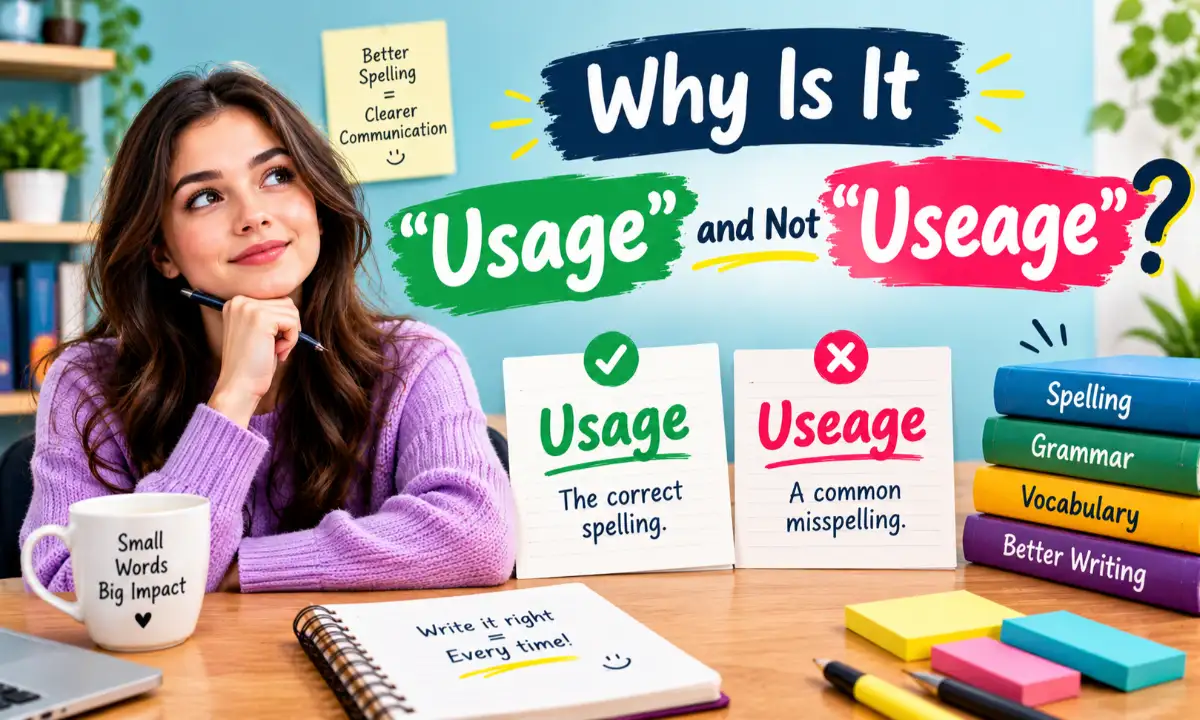
English often drops a silent e before an ending that begins with a vowel. You already do this without thinking.
| Base word | Ending | Result |
|---|---|---|
| use | -age | usage |
| store | -age | storage |
| hope | -ing | hoping |
| dance | -ing | dancing |
| true | -ly | truly |
The last row is an interesting one, because “truly” drops its e even though -ly starts with a consonant. If that one trips you up, read our guide on truly or trully.
A few words, like “mileage,” do keep their e. “Usage” isn’t one of them, and “useage” isn’t the standard spelling.
What Does Usage Mean?
“Usage” is a noun, and it has a few related meanings.
| Meaning | Example |
|---|---|
| The way words are used in a language | This is a common usage in American English. |
| How much of something is used | Our data usage doubled this month. |
| The way something is used | Please follow the usage instructions on the label. |
According to Encyclopedia.com, usage in language refers to the way elements like words, spelling, and idioms are customarily used to produce meaning. The SUNY Style Guide adds that usage also covers commonly confused words, spelling, and capitalization.
The SUNY guide gives a handy example. Deciding whether to write the number 17 or the word “seventeen” is also a usage choice. So in writing guides, “usage” often means the small decisions about how to write a word correctly.
Slang follows usage rules too. For a good example, see how the meanings differ in our guide on SMH vs LOL.
Usage in Technology and Everyday Life

Outside of grammar, you’ll see “usage” most often with technology and bills.
- Data usage: how much internet data you’ve used.
- Battery usage: which apps drain your phone.
- CPU or memory usage: how hard a computer is working.
- Water or electricity usage: how much your household uses.
Many phones and apps show these in their settings, and the spelling there is always usage. If you ever write a report or a help article on these topics, the usage or useage choice is one you’ll meet again and again.
Usage vs Use: What’s the Difference?
These two words overlap, which adds to the confusion.
| Word | Best for | Example |
|---|---|---|
| use | the act of using, or the ability to use | May I have the use of your car? |
| usage | an amount used, or the way a word is used | Water usage rose in July. |
Many writing guides suggest choosing “use” whenever it works, because it’s shorter and clearer. “The use of the tool is simple” often sounds smoother than “the usage of the tool is simple.” A good test is to swap in “the amount used” or “the way it is used.” If that fits, “usage” is the right word.
Is “Useage” Ever Correct?
In everyday writing, no. Treat “useage” as an error and write usage instead. Most spell checkers will flag it with a red line, which is a helpful sign.
If you work with editors, brand names, or older documents, you might spot “useage” in the wild. That doesn’t make it standard. For emails, school work, reports, and websites, stick with the form that readers expect.
How to Pronounce Usage
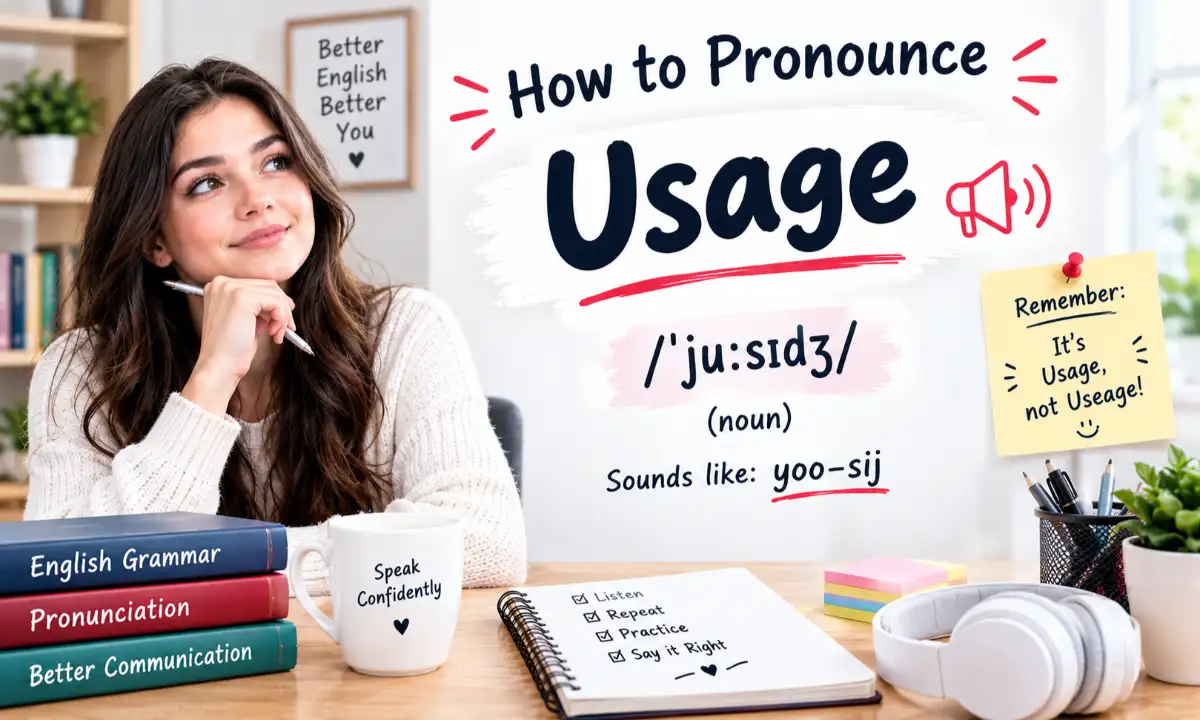
Say it as YOO-sij. The first part rhymes with “you,” and the ending sounds like “sij.”
Some speakers also say YOO-zij, with a “z” sound in the middle. Either way, the spelling stays the same, and there’s no extra e to hear.
Common Mistakes With Usage or Useage
| Wrong | Right | Why people write it |
|---|---|---|
| useage | usage | They keep the e from “use.” |
| useages | usages | The same extra e carries over. |
| usege | usage | They mix up the ending. |
| I need the usage of your car. | I need the use of your car. | “Usage” doesn’t mean permission to use. |
| data useage | data usage | The e looks natural next to “use.” |
Why this happens: The usage or useage slip is common because “use” and “usage” look related, so people expect the spelling to stay the same.
Usage or Useage in Real Life

At work
- We track software usage every month.
- Please review the usage policy before you sign.
At school
- The teacher explained the usage of “affect” and “effect.”
- Our essay covered social media usage among teens.
At home
- Our electricity usage is higher in summer.
- Check your data usage before the month ends.
In emails and texts
- Can you send me the usage report by Friday?
- My data usage is crazy this month.
On social media
- Screen time usage this week: embarrassing. 😅
- Grammar nerds, what’s your favorite word usage tip? 🤓
Usage or Useage for Students and Beginners
Learners often ask why “use” and “usage” look different at the end. The reason is simple: when you add -age, the silent e steps aside.
Try this quick drill. Add -age to each word, then check your answers.
- store
- use
- pass
- drain
Answers: storage, usage, passage, drainage. Notice that “pass” has no silent e, so nothing drops.
A Quick Self Check for Usage or Useage
Not sure what to write? Ask yourself these three questions in order.
- Am I adding -age to “use”? Then drop the silent e: usage.
- Am I talking about an amount or a pattern? Words like “data,” “water,” or “battery” usually pair well with usage.
- Would “use” sound simpler? If so, try it. “Use of” is often the cleaner choice.
If you can answer these, the usage or useage question stops being a guess and becomes a habit.
5 Easy Tricks to Spell Usage Right Every Time
Use these every time the usage or useage question comes up.
- Think “storage.” Store + age = storage, so use + age = usage.
- Split it into two chunks. US + AGE. There’s no room for an extra e.
- Search before you publish. Use find and replace to look for “useage” in your documents and posts.
- Ask if “use” works. If you can say it with “use,” the sentence is often cleaner and the spelling question disappears.
- Keep a short list. Write down words you often get wrong and review them weekly. For other common slips, see our guides on misspell or mispell, occurred or occured, and volume or volumn.
Related Questions About Usage or Useage
Is it “usage” or “useage” in British English? It’s “usage” in both American and British English.
Is “data usage” correct? Yes. It means the amount of data you use.
Is “usage” a verb? No. The verb is “use.”
What is a usage note in a dictionary? It’s a short explanation of how a word is typically used.
Is it “use of” or “usage of”? “Use of” is usually simpler and clearer.
Frequently Asked Questions
Which is correct, usage or useage?
“Usage” is correct. “Useage” is a spelling mistake.
How do you spell usage?
U-S-A-G-E. There’s no “e” between the “s” and the “a.”
What does usage mean?
It can mean the way words are used, or the amount or manner in which something is used.
How is usage different from use?
“Use” is the act of using something. “Usage” often means an amount used or the way a word is used.
How many syllables does usage have?
Two: us-age.
What is the plural of usage?
The plural is “usages,” as in “different usages of a word.”
Final Verdict: Usage or Useage?
“Usage” is the correct spelling, and “useage” is a mistake. Remember the rule: use + age = usage, and the silent e drops out, just as store + age = storage. If a sentence sounds clumsy with “usage,” try “use.”
Conclusion
The usage or useage question comes down to one small rule. When you add -age to “use,” the silent e disappears, and you get usage.
Next time your fingers want to type that extra e, picture “storage.” That quick check keeps your writing clean, whether you’re drafting a report or posting online.
Reviewed by Toseef Mustafa, MA English. Facts checked against Encyclopedia.com and the SUNY Style Guide. Last updated: October 2026.

Hi, I’m Toseef Mustafa, the creator of CompareWordz.com and a qualified English linguistics professional. My expertise includes English vocabulary, spelling, grammar, word meanings, and commonly confused words. I aim to explain language differences through clear explanations, accurate information, and practical examples. My goal is to help readers understand English better and use the right words with confidence.