
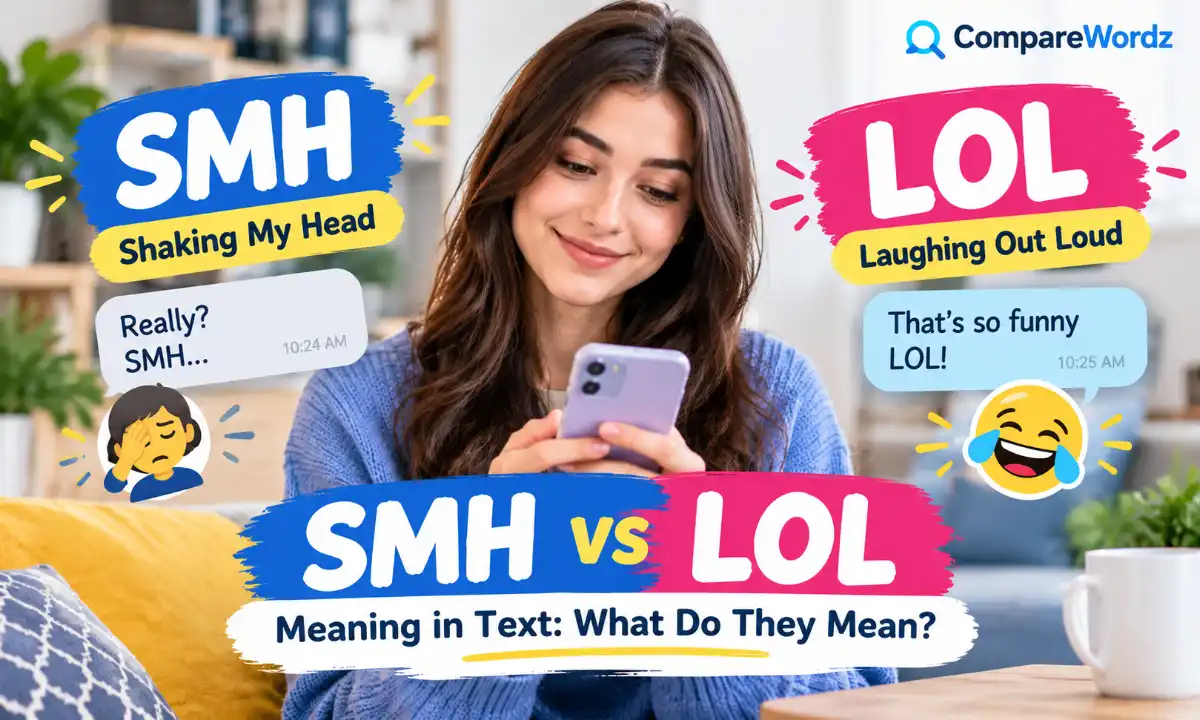
SMH vs LOL meaning in text can be confusing if you are new to internet slang or see these abbreviations in messages, comments, and social media posts.
They may both express a reaction, but they communicate very different feelings. SMH stands for “shaking my head” and is commonly used to show disbelief, disapproval, disappointment, or frustration.
LOL stands for “laughing out loud” and usually signals amusement or indicates that something is meant as a joke. Both are informal expressions used in digital communication, but they are not interchangeable.
Understanding the difference helps you choose the right abbreviation and avoid making a message sound confusing, overly critical, or unintentionally humorous.
Quick Answer
SMH means “shaking my head” and usually expresses disbelief, disapproval, frustration, or disappointment. LOL means “laughing out loud” and signals that something is funny or is meant as a joke. They are not interchangeable: use SMH for a negative or disapproving reaction and LOL for humor or amusement.
What Does SMH Mean in Text?
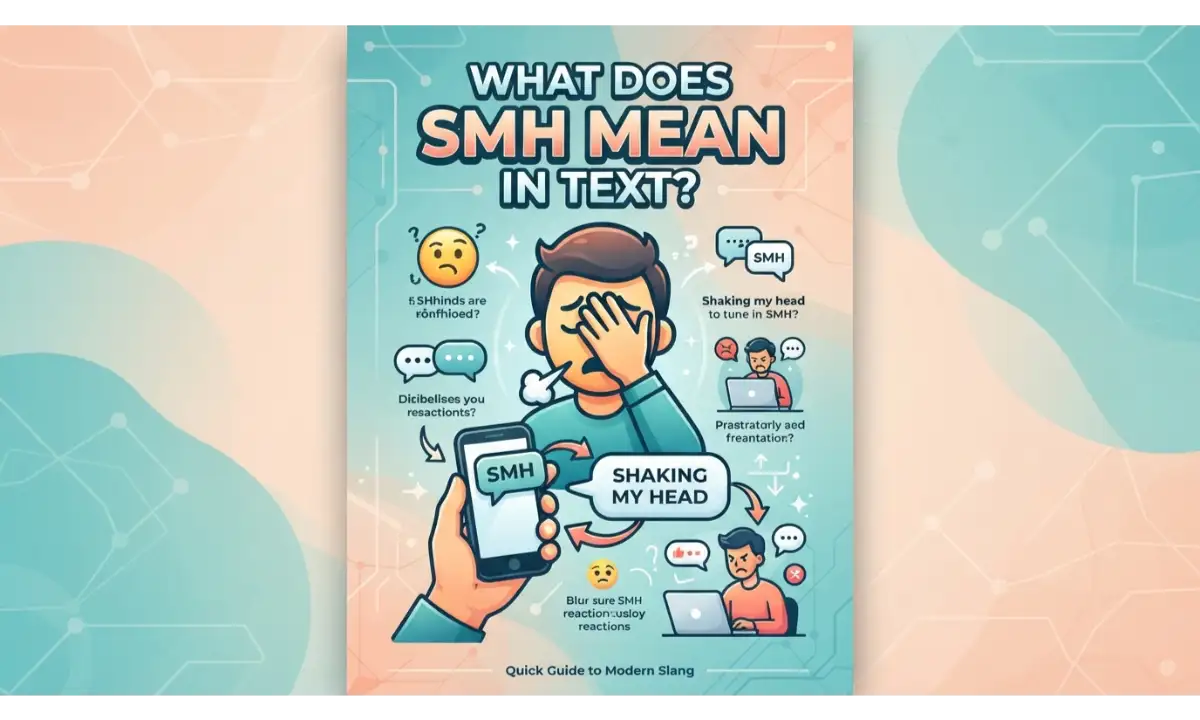
SMH is an abbreviation for “shaking my head.” It is mainly used in text messages, social media, and other informal online communication when someone does not believe something or does not approve of it.
The expression comes from the physical gesture of shaking your head, which can communicate reactions such as disbelief, disappointment, frustration, or disapproval. In online conversation, however, SMH does not necessarily mean the person is literally shaking their head. It functions as a short way of showing a reaction to what someone has said or done.
Examples of SMH
- You forgot your keys again? SMH.
- He showed up an hour late to the meeting. SMH.
- SMH, I can’t believe they canceled the game.
- You really sent that email to the entire company? SMH.
- She bought another phone even though her current one works perfectly. SMH.
The exact emotional tone depends on context. It can be mildly disappointed, genuinely frustrated, or even humorous when someone describes an obviously silly situation.
What Does LOL Mean in Text?
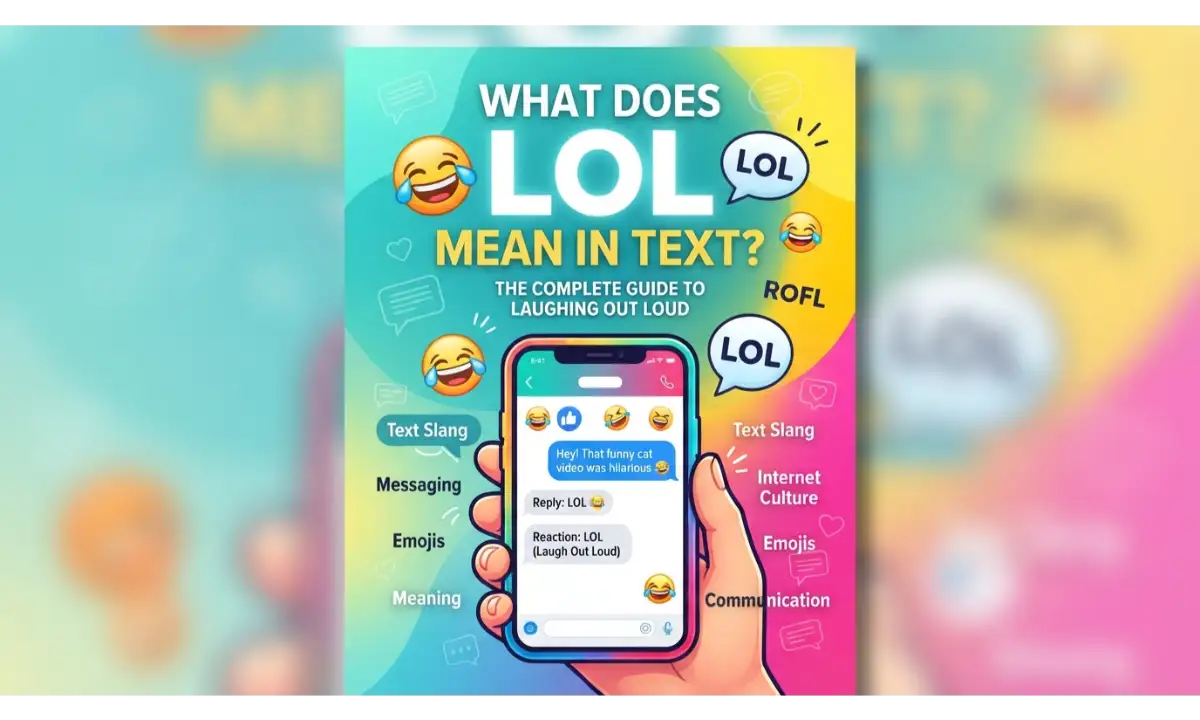
LOL stands for “laughing out loud.” It is an informal abbreviation used in texts and social media when something is funny or when the writer intends a statement as a joke.
Although the original phrase suggests actually laughing out loud, LOL does not always mean the writer is literally laughing. In modern informal communication, it can simply show amusement, signal that something is a joke, or make a message sound lighter.
Cambridge also records LOL as a verb, as in “I lolled at your reply” or “I was LOLing,” showing that the abbreviation has developed beyond its original phrase in informal usage.
Examples of LOL
- That video was hilarious lol.
- I just walked into the wrong classroom LOL.
- You really thought I was serious? LOL.
- My cat knocked the whole plant over lol.
- LOL, I completely forgot about the appointment.
Because tone is difficult to communicate through plain text, LOL can also help indicate that a statement is playful rather than serious.
SMH vs LOL: Key Difference
The simplest distinction is this:
SMH expresses disbelief or disapproval; LOL expresses amusement or humor.
They communicate different reactions to a message.
| Feature | SMH | LOL |
|---|---|---|
| Full form | Shaking my head | Laughing out loud |
| Main meaning | Disbelief, disapproval, frustration | Amusement, laughter, or joking |
| Type | Internet/text abbreviation | Internet/text abbreviation |
| Typical setting | Texting, social media, online conversation | Texting, social media, online conversation |
| Tone | Often disapproving or frustrated | Usually humorous or light |
| Formality | Informal | Informal |
| Pronunciation | Usually said as individual letters: “S-M-H” | Usually said as “L-O-L” or sometimes as a word |
| Interchangeable? | No | No |
| Example | You did that again? SMH. | That was so funny LOL. |
Both expressions are associated with informal digital communication, but their emotional purposes are different. Cambridge classifies SMH as an abbreviation used in social media and text messages for disbelief or disapproval, while LOL is used when something is funny or intended as a joke.
SMH vs LOL Examples
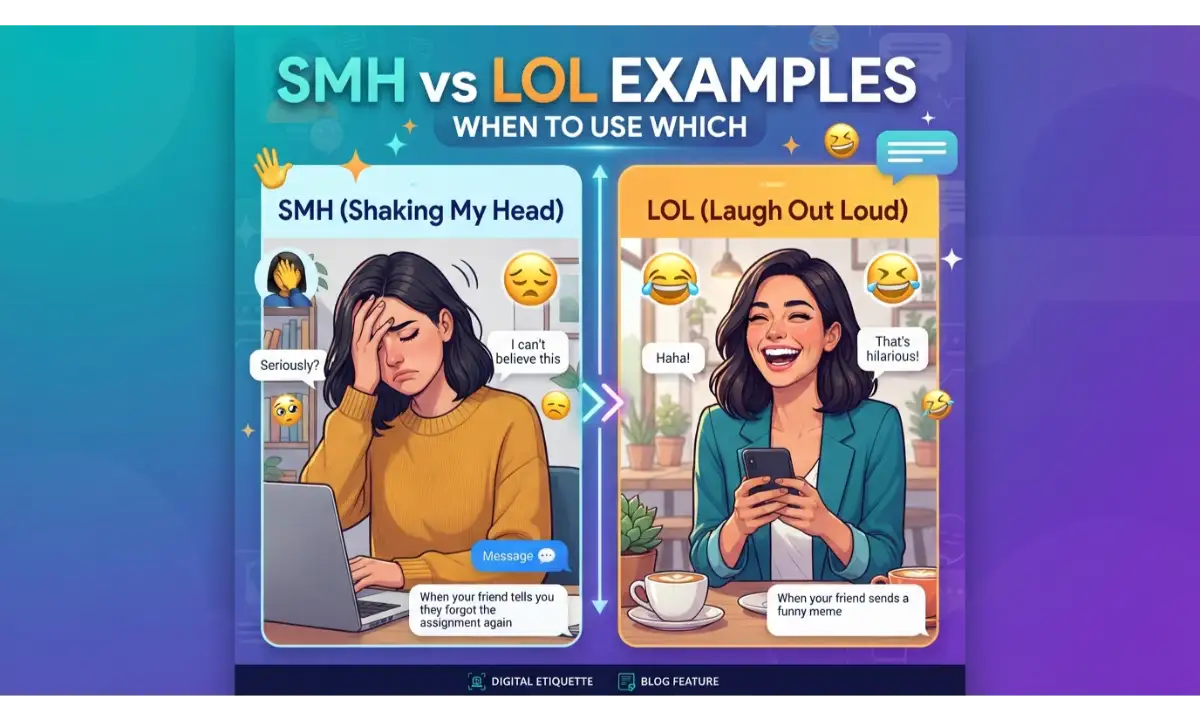
1. Someone makes an obvious mistake
SMH:
You put salt in your coffee? SMH.
LOL:
I put salt in my coffee by accident LOL.
Difference: The first reacts with disbelief or disapproval. The second treats the mistake as funny.
2. Someone tells a joke
SMH:
That joke was terrible. SMH.
LOL:
That joke was actually hilarious LOL.
Difference: SMH communicates a negative reaction; LOL communicates amusement.
3. A friend arrives late
SMH:
You said you’d be here at 7. It’s 8:30. SMH.
LOL:
You finally made it LOL.
Difference: SMH highlights frustration, while LOL can make the response sound playful.
4. Something unexpectedly funny happens
SMH:
My brother tried to fix the printer with a spoon. SMH.
LOL:
My brother tried to fix the printer with a spoon LOL.
Difference: The same event can produce either abbreviation depending on the writer’s intended reaction.
5. Responding to an obviously exaggerated statement
SMH:
You think you can finish that entire project in ten minutes? SMH.
LOL:
You think you can finish that entire project in ten minutes? LOL.
Difference: SMH emphasizes disbelief. LOL makes the response more playful or amused.
6. A social media comment
SMH:
He complained about traffic after leaving home at rush hour. SMH.
LOL:
He complained about traffic after leaving home at rush hour LOL.
Difference: SMH focuses on the person’s questionable decision; LOL focuses on the irony or humor.
SMH vs LOL Examples
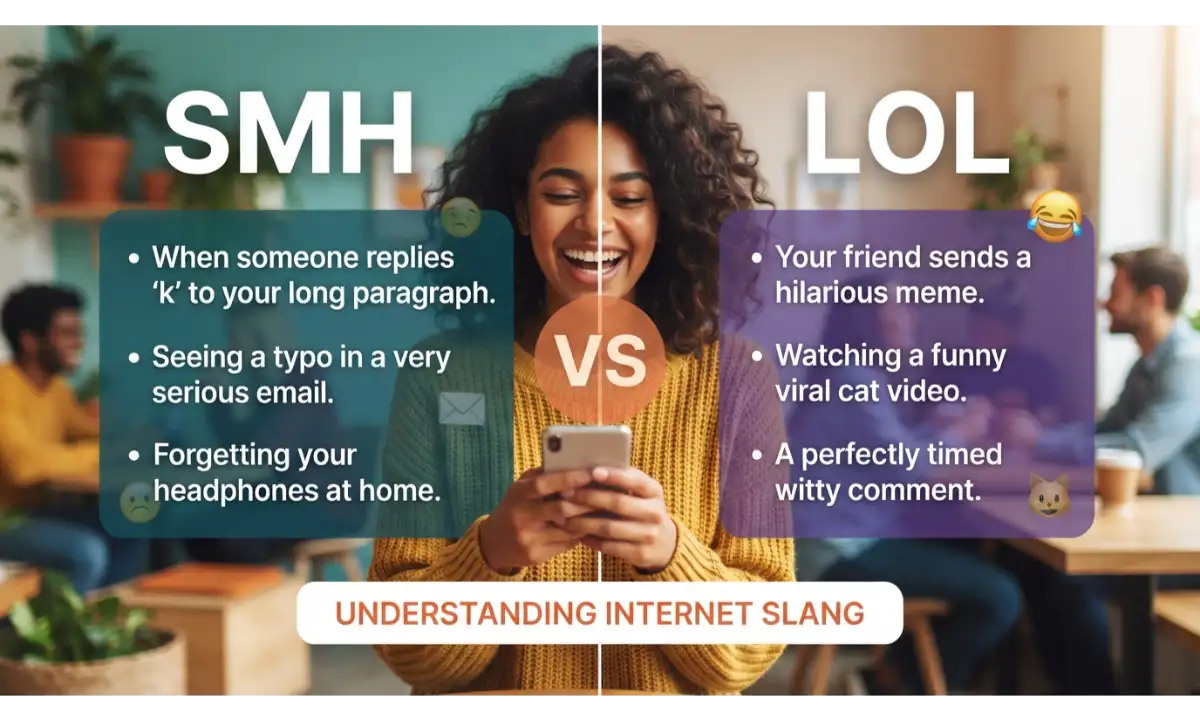
Use SMH when you want to show that you are:
- Disappointed by someone’s action
- Surprised by something unreasonable
- Frustrated by a situation
- Disapproving of a decision
- Amused by someone’s foolish behavior while still emphasizing your disbelief
For example:
You left your phone at home again? SMH.
In a friendly conversation, SMH can be teasing rather than seriously critical. Context matters. A message such as “SMH 😂” may be much lighter than “SMH. That’s unacceptable.”
Because SMH is informal, it is generally better suited to texts, chats, comments, and casual social media communication than formal emails, academic writing, or professional documents.
When to Use LOL
Use LOL when you want to:
- Show that something is funny
- Indicate that you are joking
- Make a message feel lighter
- Signal amusement at an awkward or ironic situation
- Respond casually to something humorous
For example:
I just waved back at someone who wasn’t waving at me LOL.
LOL can also soften a potentially serious or awkward statement:
I totally forgot your birthday lol.
Here, the abbreviation does not necessarily mean the writer is literally laughing. It helps communicate a casual, self-deprecating tone.
Common Mistakes With SMH and LOL
1. Using LOL when you mean disapproval
Incorrect for the intended meaning:
He broke the rules again. LOL.
Better:
He broke the rules again. SMH.
Why: If your intended reaction is frustration or disapproval, SMH communicates that reaction more clearly.
2. Assuming SMH always means anger
Not necessarily:
SMH, you actually wore two different shoes today 😂
Why: SMH can express disbelief or amused disapproval. The surrounding words and emojis can change the tone.
3. Assuming LOL always means literal laughter
Example:
I forgot my password again lol.
Why: LOL can simply make a statement sound playful or humorous. It does not prove that the person is literally laughing out loud.
4. Treating SMH and LOL as synonyms
Incorrect idea:
SMH and LOL both mean “that’s funny.”
Correct distinction:
SMH generally signals disbelief or disapproval, while LOL signals amusement or joking.
Why: Their functions overlap only in some humorous situations, not their basic meanings.
5. Using either abbreviation in formal writing
Avoid:
The results were surprising LOL.
Better formal wording:
The results were surprising.
Why: Both SMH and LOL are informal internet/texting expressions. Formal writing normally calls for standard vocabulary instead.
Easy Trick to Remember SMH vs LOL
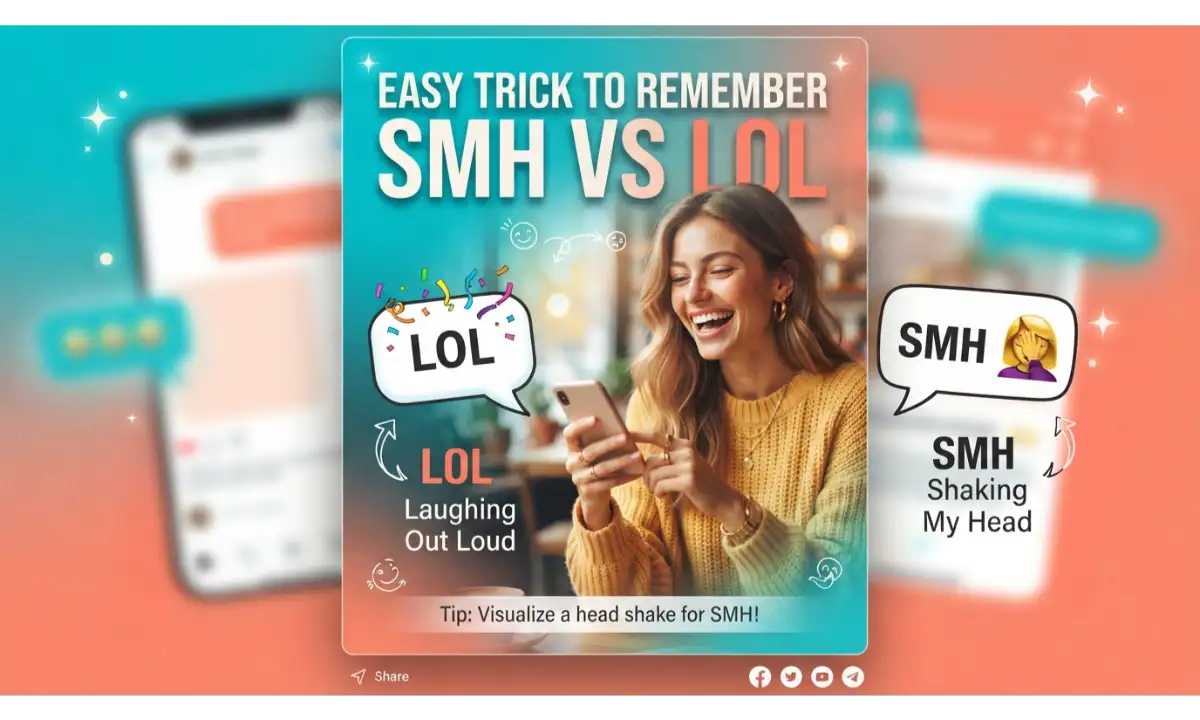
Think of the emotional reaction:
- SMH = “I can’t believe this.”
- LOL = “That’s funny.”
Another simple memory clue is the physical action behind each phrase:
SMH → shaking your head because something seems unbelievable, disappointing, or unacceptable.
LOL → laughing out loud because something is amusing or intended as a joke.
So if your reaction is closer to “Seriously?”, SMH may fit. If it is closer to “Haha!”, LOL is usually the better choice.
Pronunciation of SMH and LOL

Both abbreviations are commonly understood as letter-by-letter expressions in conversation.
SMH is generally pronounced “S-M-H.”
LOL is commonly pronounced “L-O-L,” although some speakers pronounce it as a single word. Cambridge gives UK pronunciations for LOL as /lɒl/ and /ˌel.əʊˈel/, and US pronunciations as /lɑːl/ and /ˌel.oʊˈel/.
In ordinary texting, however, pronunciation is usually irrelevant because people encounter these abbreviations primarily in written digital communication.
Are SMH and LOL Formal or Informal?
Both SMH and LOL are informal expressions associated with texting, social media, and online communication. Cambridge specifically describes LOL as informal and identifies SMH as an abbreviation used in social media and text messages.
They can work naturally in:
- Text messages
- Group chats
- Social media comments
- Casual online conversations
- Informal posts
They are usually inappropriate in:
- Academic essays
- Formal reports
- Business documents
- Official correspondence
- Professional writing where a formal tone is expected
Can SMH and LOL Be Used Interchangeably?
No. SMH and LOL are not interchangeable because they normally communicate different reactions.
Compare:
My friend forgot his own phone number. SMH.
This suggests disbelief or amused disapproval.
My friend forgot his own phone number LOL.
This suggests that the situation is funny or that the writer is joking about it.
Sometimes the same event can reasonably receive either abbreviation. The difference is the writer’s attitude toward the event, not necessarily the event itself.
FAQs About SMH vs LOL
What does SMH mean in texting?
SMH means “shaking my head.” In texting and social media, it is commonly used to express disbelief or disapproval. Depending on context, it can also convey frustration, disappointment, or amused disbelief. It does not necessarily mean the writer is physically shaking their head.
What does LOL mean in texting?
LOL means “laughing out loud.” It is an informal abbreviation used when something is funny or when the writer wants to indicate that a statement is a joke. In modern texting, LOL does not necessarily mean the person is literally laughing.
Is SMH more negative than LOL?
Generally, yes in terms of basic communicative purpose: SMH commonly signals disbelief, disapproval, or frustration, while LOL usually signals amusement or joking. However, tone depends on context. An SMH message can be playful, and LOL can sometimes be used to soften an awkward or potentially serious statement.
Can I use SMH and LOL together?
Yes, they can appear together when a situation is both ridiculous and funny. For example: “He tried to open the door with his car keys SMH LOL.” Here, SMH expresses disbelief while LOL signals that the situation is amusing. Their meanings remain distinct even when used in the same message.
Conclusion
The difference between SMH and LOL is mainly about the reaction you want to communicate.
SMH means “shaking my head” and is commonly used to express disbelief, disapproval, frustration, or amused disbelief.
LOL means “laughing out loud” and is used to show amusement or indicate that something is intended as a joke.
They are both informal texting and social media abbreviations, but they are not interchangeable. A simple way to remember them is: SMH = “I can’t believe this,” while LOL = “That’s funny.”

Hi, I’m Toseef Mustafa, the creator of CompareWordz.com and a qualified English linguistics professional. My expertise includes English vocabulary, spelling, grammar, word meanings, and commonly confused words. I aim to explain language differences through clear explanations, accurate information, and practical examples. My goal is to help readers understand English better and use the right words with confidence.