

When writing in English, you might wonder if truly or trully is the correct spelling. Both forms may look similar, but only one is accepted in standard English. If you want to express genuine feelings, emphasize a quality, or show that something is real, the correct word is truly.
Understanding this spelling difference can help you write clearer emails, messages, essays, and professional documents. Although trully may seem reasonable because English sometimes doubles consonants, this word follows a different spelling pattern. You form truly from the adjective true by dropping the final e and adding -ly.
In this guide, you’ll learn which spelling is correct, what truly means, why people misspell it, and how to use it naturally in sentences.
Quick Answer
Truly is the correct spelling; trully is incorrect. Truly is an adverb meaning genuinely, sincerely, or really. It comes from the word true, with the final e removed before adding -ly. For example: “I truly appreciate your help.” Remember the simple spelling pattern: true → truly.
Truly or Trully: Which Is Correct?
Truly is the only correct spelling of this adverb in standard modern English. Trully is a common misspelling and should be avoided in formal and informal writing.
| Word | Correct or incorrect? | Explanation | Example |
|---|---|---|---|
| Truly | Correct | Standard English spelling | I truly enjoyed the concert. |
| Trully | Incorrect | Adds an unnecessary second l | I truly enjoyed the concert. |
| Truely | Incorrect | Keeps the final e from true | She is truly grateful. |
| True | Correct | An adjective meaning real or accurate | The statement is true. |
The difference between truly and trully is spelling, not meaning. If you want to emphasize sincerity or reality, always write truly.
What Does Truly Mean?

Truly is an adverb that expresses sincerity, genuineness, or a strong degree of a quality. It can modify verbs, adjectives, and other expressions, depending on the sentence.
For example, in “I truly believe you,” the word emphasizes the speaker’s sincere belief. In “It was a truly wonderful day,” it strengthens the description of the day.
According to established English dictionaries, truly can express truth, sincerity, and emphasis.
. Truly Means Genuinely or Really
Use truly when you want to emphasize that something is genuine, real, or actually the case.
Examples:
- She is truly talented.
- This is a truly beautiful garden.
- I truly believe you can succeed.
In these sentences, truly strengthens the meaning of the statement.
. Truly Means Sincerely
Truly can also express honest feelings, gratitude, regret, or appreciation.
Examples:
- I am truly sorry for the misunderstanding.
- We are truly grateful for your support.
- I truly appreciate your kindness.
This use is especially common in personal messages, thank-you notes, and professional communication.
. Truly Emphasizes a Quality
Sometimes, truly highlights how strongly a person or thing possesses a particular quality.
Examples:
- It was a truly unforgettable experience.
- He is a truly remarkable teacher.
- The mountain view was truly spectacular.
The exact meaning depends on the context, but the word generally adds emphasis to the statement.
Why Is Truly Spelled With One L?
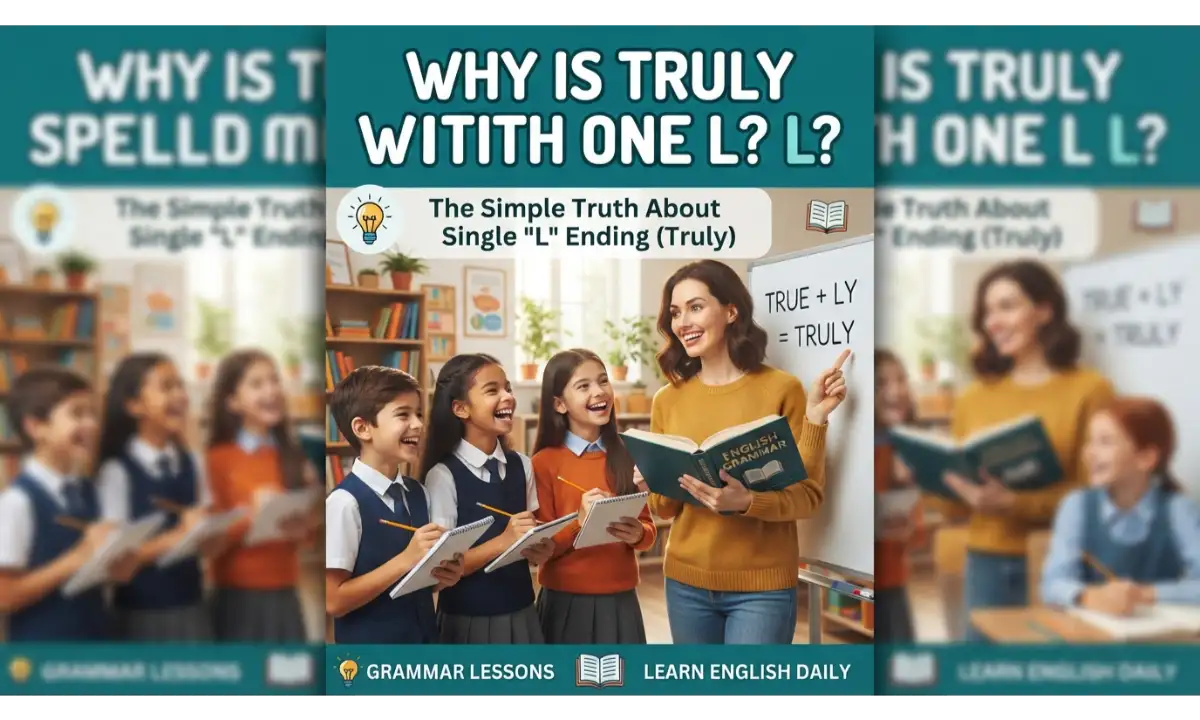
The spelling of truly becomes easier to remember when you understand how the word is formed.
The original adjective is true. When you form the adverb, you remove the final e and add -ly. This produces truly, not truely or trully.
The spelling pattern is:
TRUE → TRU + LY → TRULY
Notice that the word does not need an extra l. Adding another l creates the incorrect spelling trully.
This is a useful word-specific spelling pattern. However, English word formation includes exceptions, so you should not assume every word ending in e follows precisely the same pattern.
Why Do People Confuse Truly and Trully?
Several factors can make this spelling mistake easy to make.
- Consonant doubling: English contains many words with double consonants, so writers may mistakenly add another l.
- Uncertainty about spelling rules: Some people know that truly comes from true but are unsure what happens to the final e.
- Typing quickly: When writing texts, emails, or social media posts, an extra letter can slip into a word.
- Limited proofreading: A familiar-looking misspelling can go unnoticed when someone reviews a sentence too quickly.
These mistakes are understandable, but the solution is simple. Remember that truly contains one l and no e after the u.
Examples of Truly in Sentences
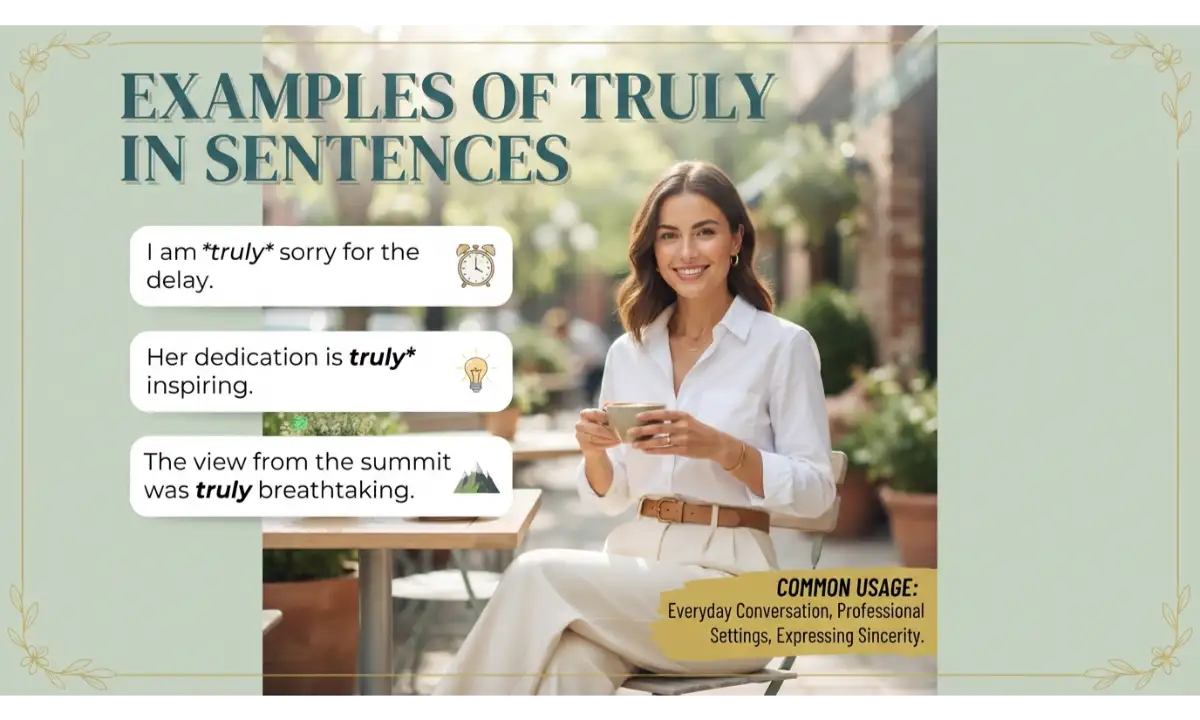
Here are 10 examples showing how to use truly correctly in everyday and formal English.
- I truly appreciate everything you have done for me.
- She is truly one of the most talented singers in the group.
- We are truly grateful for your generous support.
- He truly believes that hard work makes a difference.
- It was a truly memorable day for our family.
- I am truly sorry for arriving late to the meeting.
- This book is truly helpful for beginners learning English.
- They were truly surprised by the unexpected announcement.
- A truly honest person admits mistakes and learns from them.
- I truly hope you achieve all your goals.
In each example, truly emphasizes sincerity, reality, or the degree of a quality.
Common Spelling Mistakes Involving Truly
Writers sometimes confuse truly with other words that look or sound similar. Understanding these differences can help you avoid errors.
. Trully Instead of Truly
Incorrect: I trully respect your opinion.
Correct: I truly respect your opinion.
Tip: Remember that truly has only one l. There is no need to double the consonant.
. Truely Instead of Truly
Incorrect: She is truely happy with the result.
Correct: She is truly happy with the result.
Tip: Drop the final e from true before adding -ly. The result is truly.
. Truly Instead of True
Incorrect: The statement is truly.
Correct: The statement is true.
Tip: Use true as an adjective to describe something accurate or real. Use truly as an adverb to add emphasis or express sincerity.
. Truly Instead of Truthfully
Incorrect: The witness answered truly about what happened. (This may be grammatical in some contexts, but it is less natural for emphasizing an honest answer.)
Better: The witness answered truthfully about what happened.
Tip: Use truly to emphasize sincerity, reality, or degree. Use truthfully when you mean honestly or without hiding the truth.
True vs. Truly vs. Truth vs. Truthful
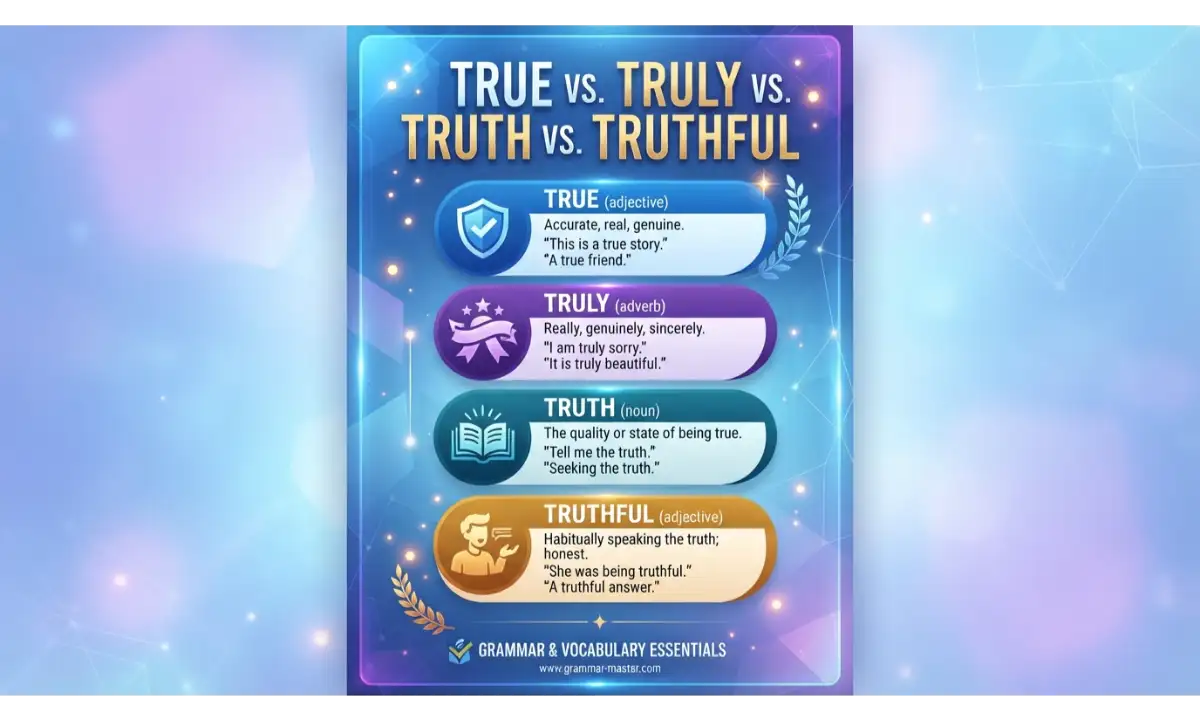
These words belong to the same word family, but each serves a different grammatical purpose.
| Word | Part of speech | Meaning | Example |
|---|---|---|---|
| True | Adjective | Real, accurate, or correct | Her story is true. |
| Truly | Adverb | Genuinely, sincerely, or really | I truly believe her. |
| Truth | Noun | Facts or what is real | He told the truth. |
| Truthful | Adjective | Honest or accurate | She gave a truthful answer. |
| Truthfully | Adverb | In an honest manner | He answered truthfully. |
Although these words are related, you cannot always use them interchangeably. Choose the form that matches your intended meaning and the grammatical role it plays in the sentence.
Is Truly Appropriate for Formal Writing?
Yes. Truly is appropriate in both formal and informal English when it fits the intended meaning.
You can use it in business emails, academic writing, personal letters, professional messages, and everyday conversations. For example, “I truly appreciate your assistance” sounds natural in a professional email.
The phrase “Yours truly” is also a traditional letter sign-off, particularly in North American English.
However, avoid adding truly to every sentence simply to make your writing sound stronger. Use it when you genuinely want to emphasize sincerity, reality, or degree.
Frequently Asked Questions
Is it truly or trully?
Truly is correct. Trully is a misspelling and should be replaced with truly in standard English writing.
Why does truly have only one l?
The correct spelling is truly, with one l. The word is formed from true by dropping the final e and adding -ly. No additional l is needed.
What does truly mean?
Truly means genuinely, sincerely, or really, depending on the context. For example, “I truly appreciate your help” expresses sincere gratitude.
Is truly a real English word?
Yes. Truly is a standard English adverb recognized by established dictionaries, including Cambridge Dictionary and Oxford Learner’s Dictionaries.
Can I use truly in formal writing?
Yes. Truly works in formal and informal writing when used appropriately. For example, “We truly appreciate your continued support” is suitable for a professional message.
What is the difference between true and truly?
True is generally an adjective meaning real or accurate. Truly is an adverb that emphasizes sincerity, reality, or degree. For example, “The statement is true” and “I truly believe the statement” use the words differently.
Is truely also incorrect?
Yes. Truely is a misspelling of truly in standard modern English. The correct form drops the final e from true before adding -ly.
What is the opposite of truly?
There is no single opposite of truly that works in every context. Depending on the sentence, possible contrasts include falsely, insincerely, or untruthfully. Choose the word that best expresses the opposite meaning you intend.
How do you pronounce truly?
Truly is commonly pronounced /ˈtruːli/, which sounds like “TROO-lee.” The first syllable carries the main stress.
What is a synonym for truly?
Common synonyms include genuinely, sincerely, really, and indeed. The best choice depends on the context. For example, sincerely often emphasizes honest feelings, while genuinely emphasizes authenticity.
Conclusion
The correct spelling is truly, with one l and no e between the u and l. Trully and truely are common misspellings, not standard alternatives.
To remember the correct form, start with true, remove the final e, and add -ly. The result is truly, an adverb that means genuinely, sincerely, or really.
Whenever you are unsure whether to write truly or trully, choose truly. This simple spelling rule will help you write more clearly and confidently in everyday messages, professional emails, and formal documents.

Hi, I’m Toseef Mustafa, the creator of CompareWordz.com and a qualified English linguistics professional. My expertise includes English vocabulary, spelling, grammar, word meanings, and commonly confused words. I aim to explain language differences through clear explanations, accurate information, and practical examples. My goal is to help readers understand English better and use the right words with confidence.
1 thought on “Truly or Trully: Which Spelling Is Correct?”
Comments are closed.