
Have you ever wondered if toward or towards is the correct spelling? You’re not alone! This common English spelling question confuses students, writers, and even professionals.
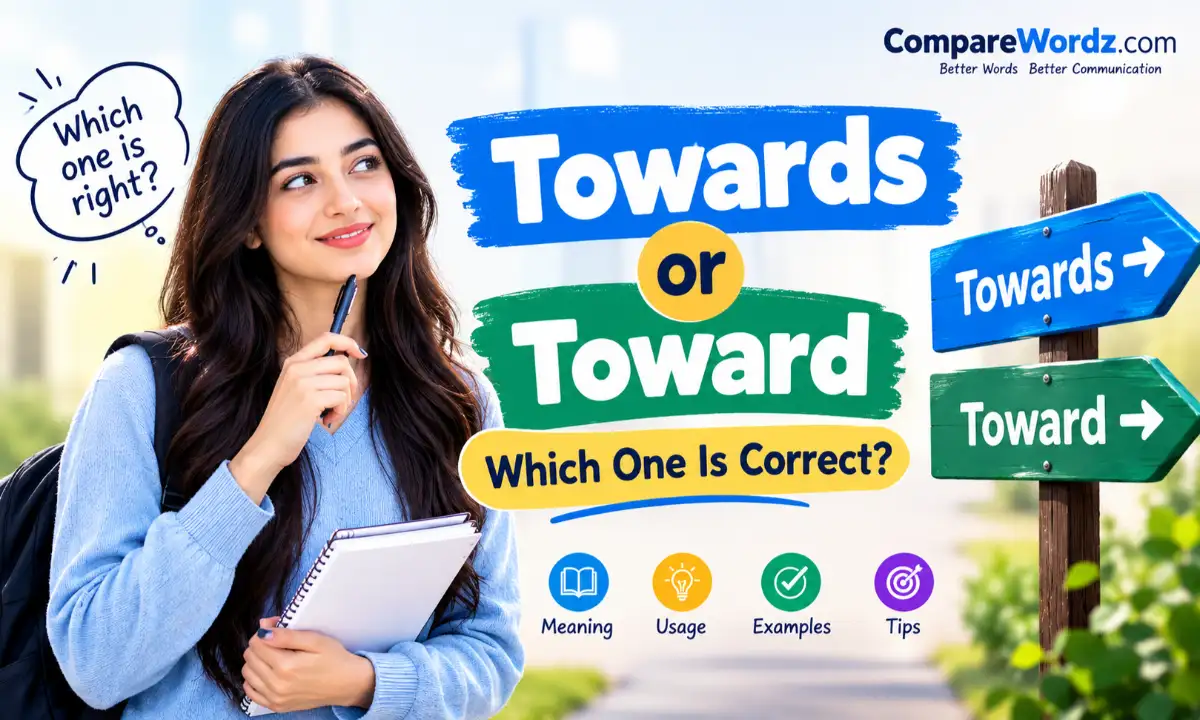
The amazing truth is that both words are correct and share the same meaning. The main difference lies in regional preferences: toward is more common in American English, while towards is preferred in British English.
In this guide, you’ll discover the key differences, real-life examples, common mistakes, and expert tips to help you choose the right spelling with confidence!
Written by Toseef Mustafa, MA English, English Grammar Specialist with 5 years of experience | Last updated: October 2026
Towards or Toward: Quick Answer
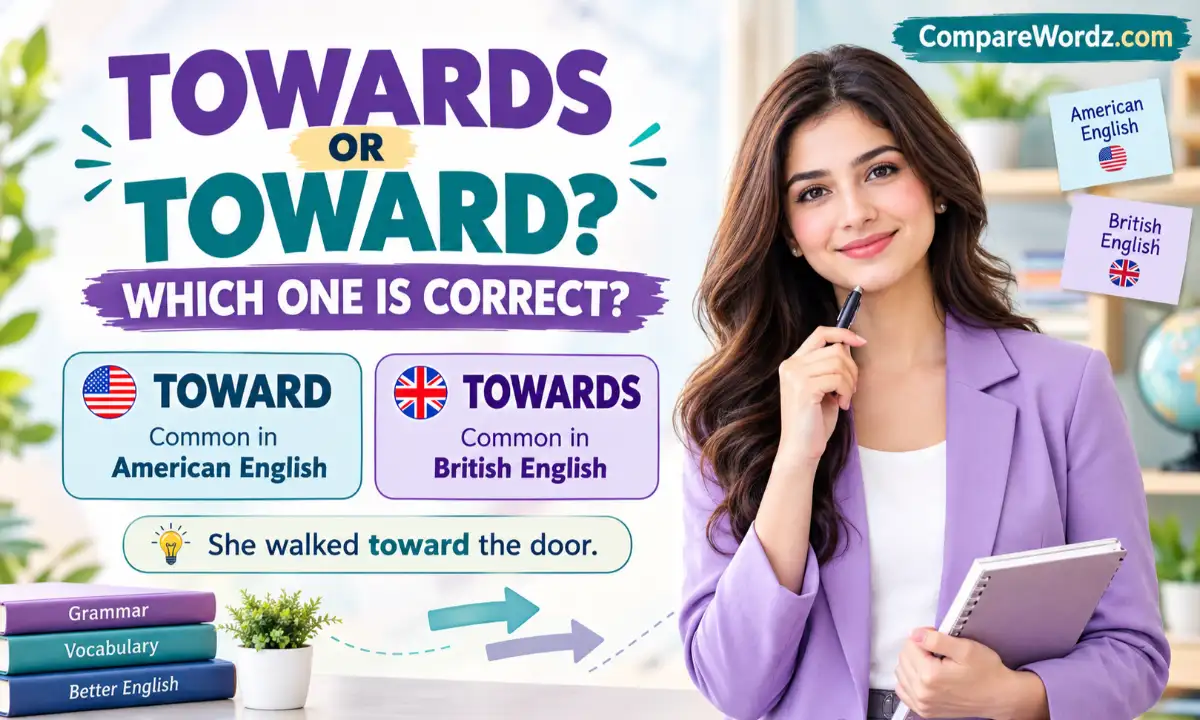
Both are correct. They mean the same thing: “in the direction of” or “in relation to.”
- Toward is more common in American and Canadian English.
- Towards is more common in British and Australian English.
Examples:
- She walked toward the door. (American style)
- She walked towards the door. (British style)
Simple rule: Pick the one that matches your audience, then stay consistent.
Is There a Real Difference Between Toward and Towards?
No. Dictionaries treat them as two forms of the same word, and the meaning is identical. The difference is regional habit, not grammar.
Merriam-Webster notes that a few strict grammarians have argued against “towards” in American English, but they are in the minority. In practice, most readers will not notice either spelling.
Toward vs Towards at a Glance
| Feature | Toward | Towards |
| Meaning | In the direction of | In the direction of |
| Most common in | US, Canada | UK, Australia |
| Style guides | Preferred by AP and Chicago for American writing | More common in British writing |
| Formal writing | Fine | Fine |
| Everyday speech | Fine | Fine |
Towards or Toward: Which One Should You Use?
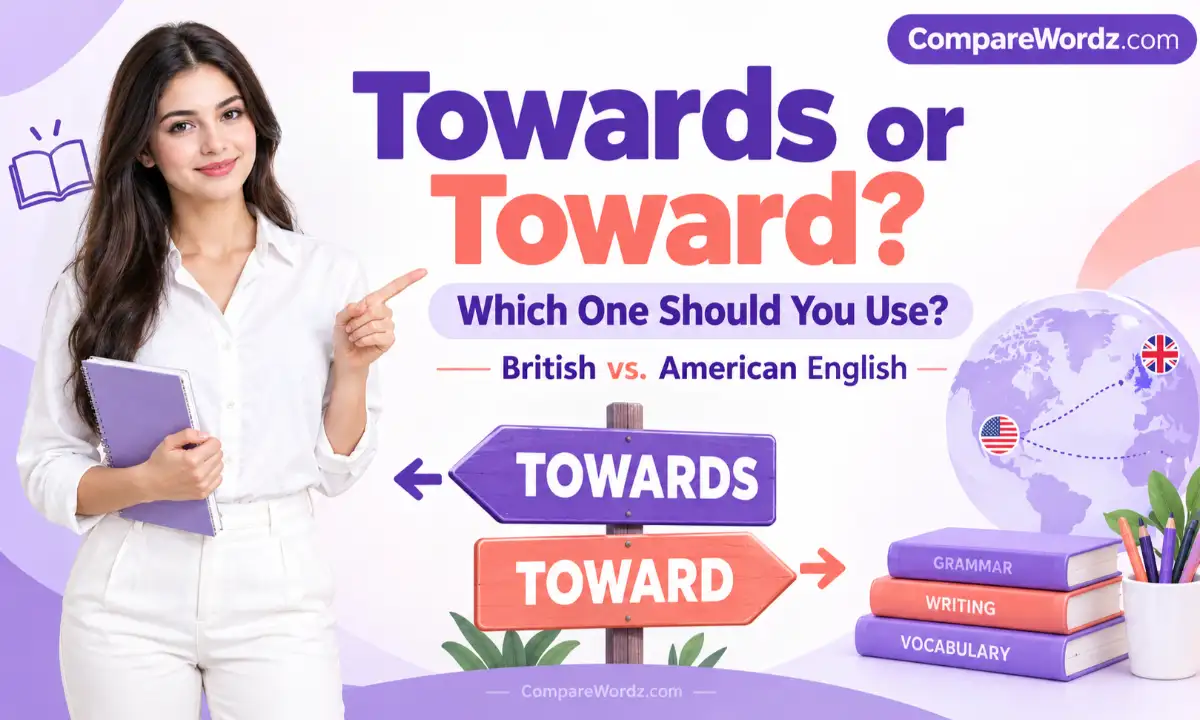
Match your reader. Here is a quick guide.
- Writing for Americans or Canadians: Use toward.
- Writing for British or Australian readers: Use towards.
- Writing for a global audience: Either works.
- Following a style guide or school rule: Do what the guide says. The AP Stylebook and the Chicago Manual of Style both recommend toward for American English.
- Taking an English exam: Use the version that matches the exam’s English, American or British.
A Simple Way to Remember
Towards has an s, and so does British. Toward has no extra letter, and neither does American.
Think of it this way: the shorter word goes with the shorter spelling habit across the Atlantic.
Why Do Both Spellings Exist?
Both come from the Old English word tōweard, and both have been around for a very long time. Neither is a modern invention or a typo. English simply kept two forms, and over the years each region leaned toward its own favorite.
The Same Pattern in Other Words
The towards or toward question shows up in other direction words too. American English usually drops it. British English usually keeps it.
| American | British |
| toward | towards |
| forward | forwards |
| backward | backwards |
| upward | upwards |
| downward | downwards |
| afterward | afterwards |
Once you spot the pattern, you can handle all of them with one habit.
Toward and Towards in Real Sentences
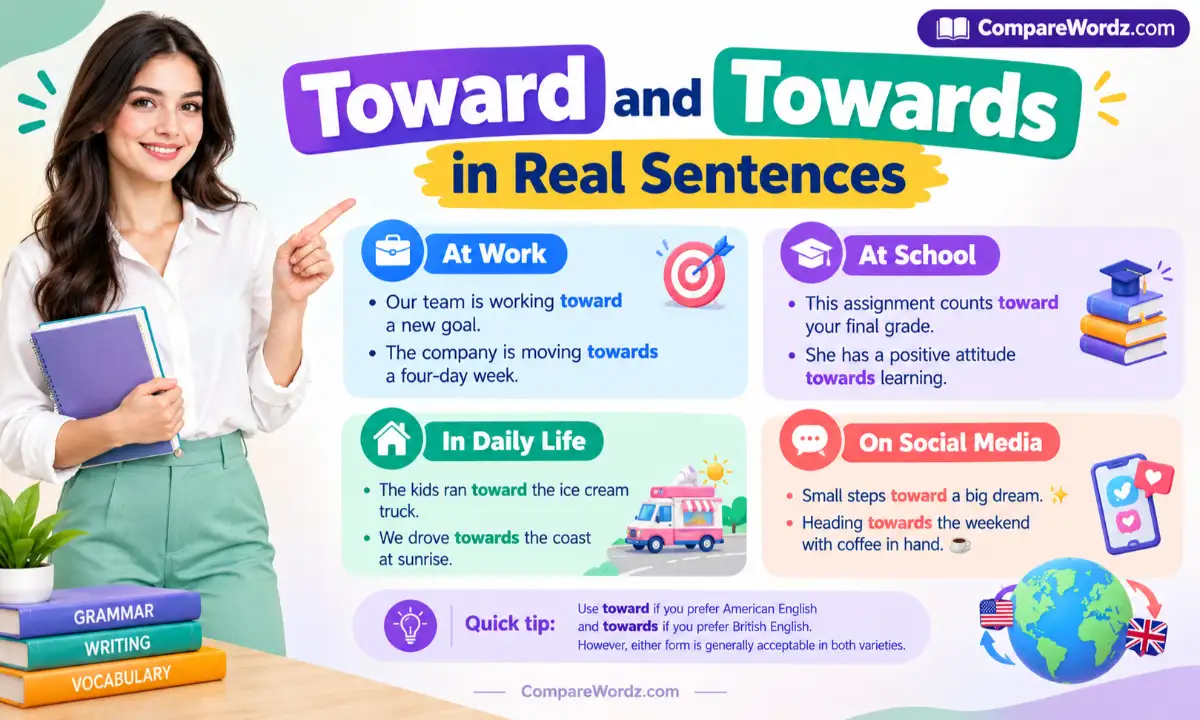
At work
- Our team is working toward a new goal.
- The company is moving towards a four day week.
At school
- This assignment counts toward your final grade.
- She has a positive attitude towards learning.
In daily life
- The kids ran toward the ice cream truck.
- We drove towards the coast at sunrise.
On social media
- Small steps toward a big dream. ✨
- Heading towards the weekend with coffee in hand. ☕
Common Phrases With Toward or Towards
Some phrases come up again and again. The towards or toward choice depends on your audience, but the meaning stays the same.
- work toward / work towards a goal
- count toward / count towards your grade
- lean toward / lean towards a decision
- a step toward / a step towards progress
- contribute toward / contribute towards the cost
- toward / towards the end of the day
If you learn these as chunks, you’ll stop second guessing yourself.
Quick Check: Which Would You Choose?
Try these four towards or toward situations. There’s no single right answer, only the right one for your reader.
- You’re writing a blog post for readers in New York. Pick toward.
- You’re writing a school essay for a teacher in London. Pick towards.
- You’re writing a global company update. Pick either one.
- You’re quoting a British newspaper in an American report. Keep towards inside the quote.
Common Mistakes With Towards or Toward
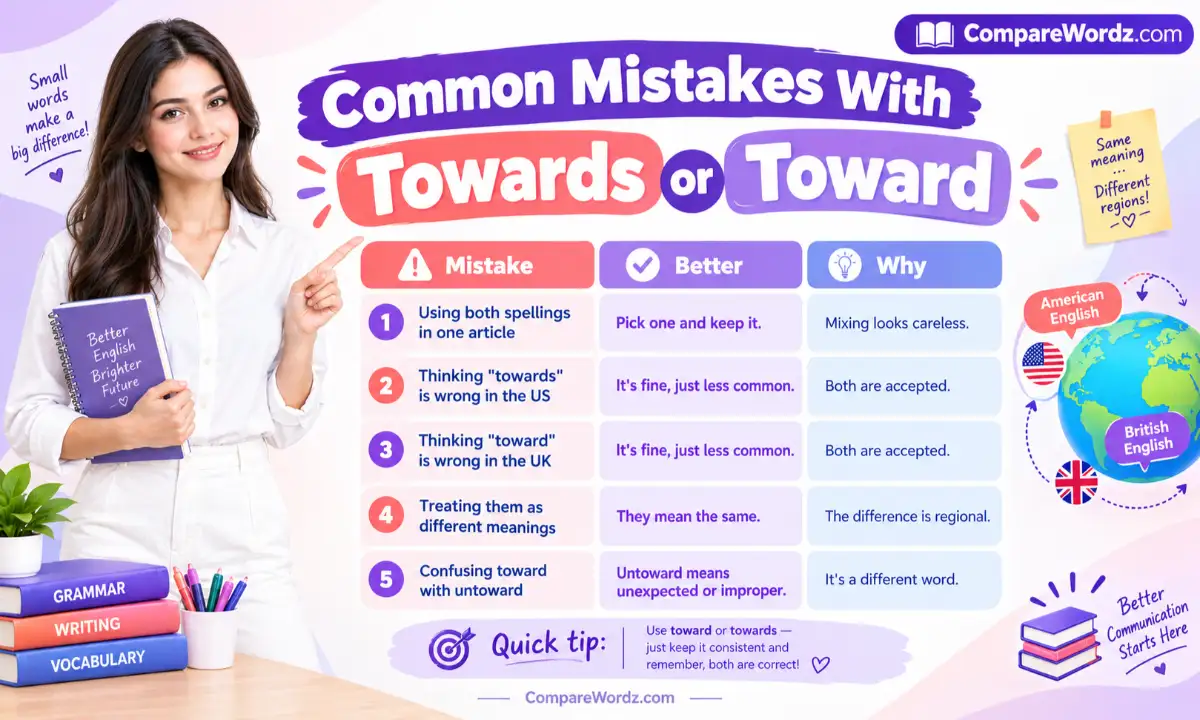
| Mistake | Better | Why |
| Using both spellings in one article | Pick one and keep it | Mixing looks careless |
| Thinking “towards” is wrong in the US | It’s fine, just less common | Both are accepted |
| Thinking “toward” is wrong in the UK | It’s fine, just less common | Both are accepted |
| Treating them as different meanings | They mean the same | The difference is regional |
| Confusing toward with untoward | Untoward means unexpected or improper | It’s a different word |
Why this happens: Style guides sound strict, so people assume one spelling must be an error. It usually isn’t.
Expert Tips for Towards or Toward
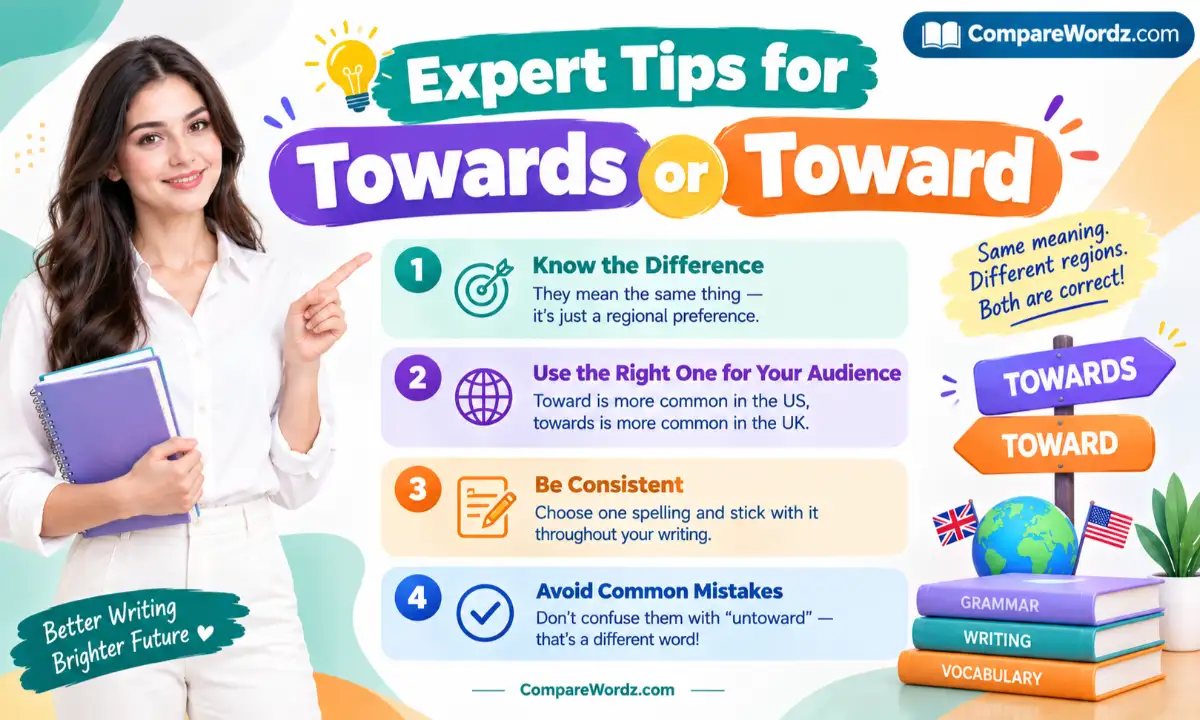
- Check your spell checker’s language. Set it to US or UK English, and it will often flag the version you didn’t choose.
- Use find and replace before you publish. Search for “toward” and “towards” to make sure you used only one.
- Match your sources. If you quote a British or American source, keep its spelling in the quote.
- Don’t change a client’s style. If a brand uses one form, follow it.
Related Questions
Is “working towards” correct? Yes. It’s especially common in British English.
Is “toward” a preposition? Yes. It shows direction or relationship.
Is “towards” informal? No. It’s standard, formal, and informal alike.
Do Americans say “towards”? Sometimes. Many do, even if style guides prefer “toward”.
Do the British ever say “toward”? Yes, though it’s less common.
Frequently Asked Questions
Towards or toward: which is more common in academic writing?
It depends on the style guide. Chicago and AP prefer toward for American writing, while British academic writing usually uses towards.
Do toward and towards mean the same thing?
Yes. They both mean “in the direction of.”
Which is more formal, toward or towards?
Neither. Both work in formal and casual writing.
Which should I use in an American essay?
Use toward, since American style guides prefer it.
Which should I use in a British essay?
Use towards, which is the usual British form.
Can I use toward and towards in the same document?
It’s better not to. Choose one and keep it consistent.
Final Verdict: Towards or Toward?
Toward and towards are the same word with a regional spelling. Use toward for American and Canadian readers, and towards for British and Australian readers.
From My Experience
In my 5 years of explaining grammar, the most common worry I hear about towards or toward is that one spelling must be a mistake. In most cases, neither is. When I help students and writers with this pair, I tell them to ask one question first: who is reading this? Once you know your audience, the choice takes about two seconds.
Conclusion
The towards or toward question looks bigger than it is. Neither spelling is wrong, and the meaning never changes. What matters is knowing your reader.
So the next time you stop mid sentence, relax. Pick the spelling that fits your audience and move on to the next line.
Reviewed by Toseef Mustafa, MA English. Facts checked against Merriam-Webster, the Chicago Manual of Style, and the AP Stylebook. Last updated: October 2026.

I’m MK Jan Mustafa Kamal, the author of CompareWordz.com, specializing in English linguistics, word meanings, spelling, and language usage.
I hold an M.A. in English and have 8 years of experience in English language and vocabulary studies. My goal is to explain confusing words, spelling differences, grammar rules, and meanings in clear, simple, and accurate language. I focus on providing well-researched, fact-checked, and easy-to-understand content that helps readers use English with confidence. Through CompareWordz.com, I aim to make learning English words and their correct usage easier for everyone.