
A meeting note says, “Insuring the room is booked by Friday.” You pause. Is someone buying coverage for a conference room? Probably not. The writer most likely meant “ensuring,” and the slip is easy to make.
If you’ve done the same, you’re in good company. The two words overlap just enough to cause trouble.
That’s why people search ensuring vs insuring. These are the -ing forms of two verbs that look alike and sound alike, so the confusion carries straight over.
Below you’ll find a simple rule, a few quick checks, and the phrases where each word belongs, including one kind of sentence that needs both.
Ensuring vs Insuring: Quick Answer
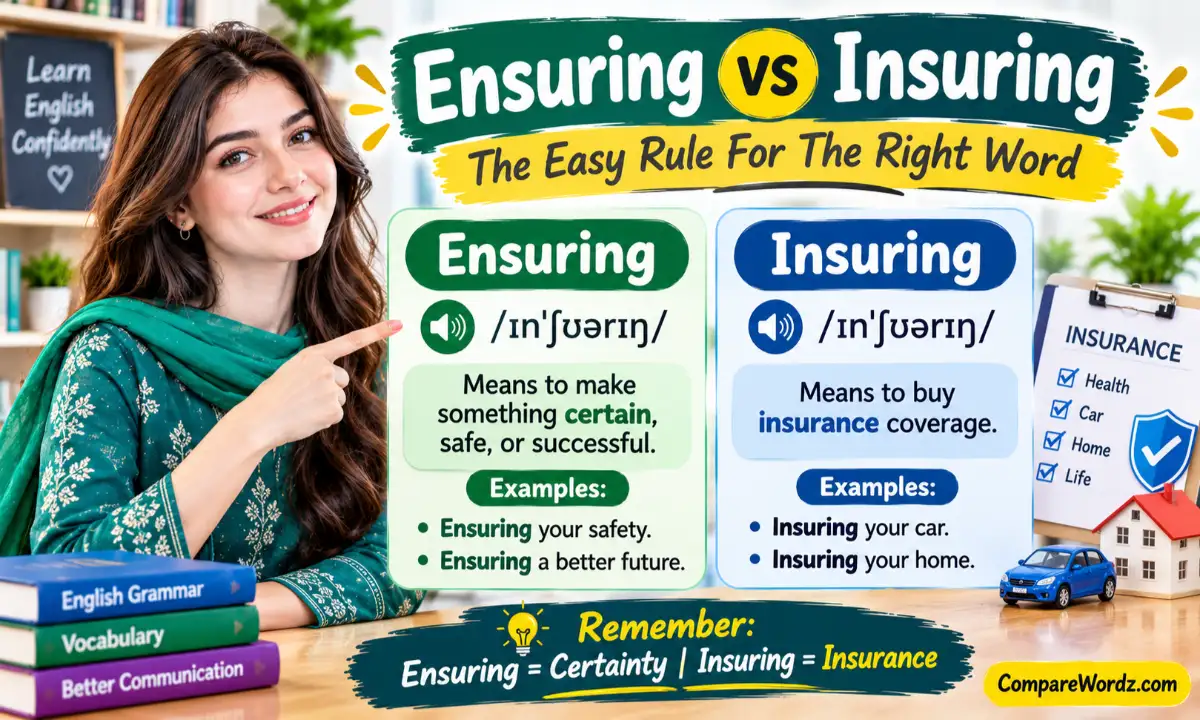
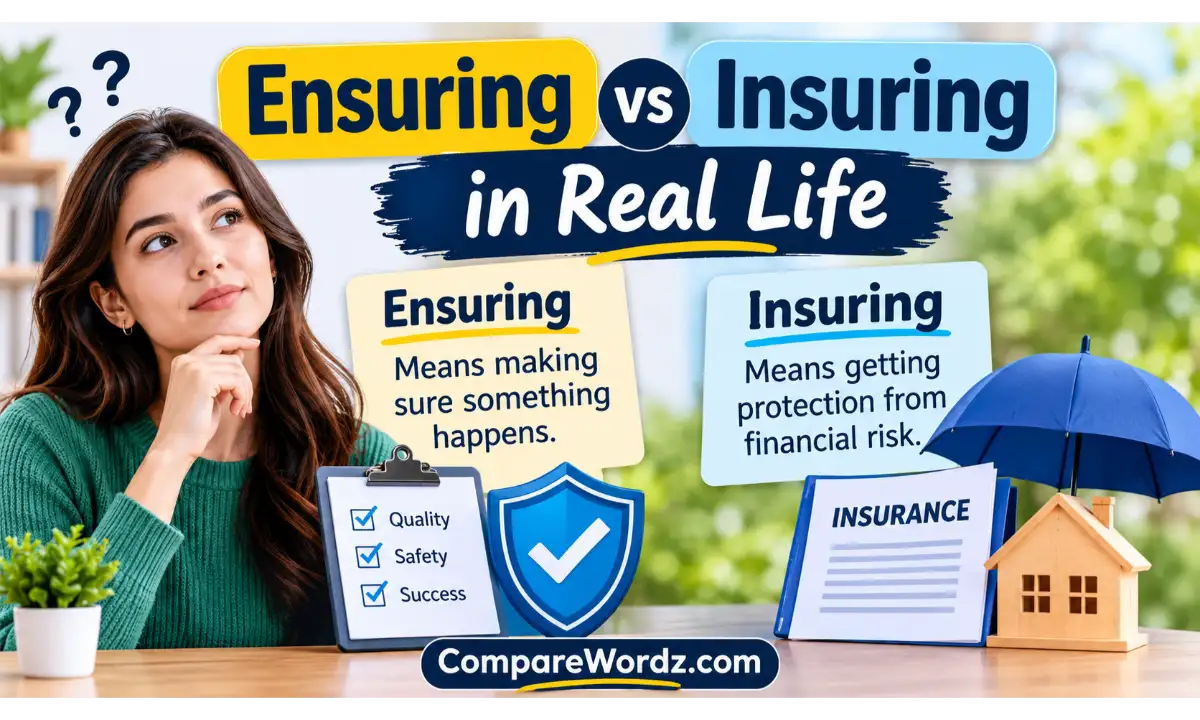
Ensuring means making sure something happens. Insuring means covering something with insurance.
- Ensuring that every student has a book is the teacher’s goal.
- We’re insuring the new van this week.
- Ensuring a smooth launch takes planning.
Simple rule: if a policy is involved, write insuring. For anything else about making certain, write ensuring. Think of ensuring as the action of making certain, and insuring as the act of buying coverage.
What Do Ensuring and Insuring Mean?
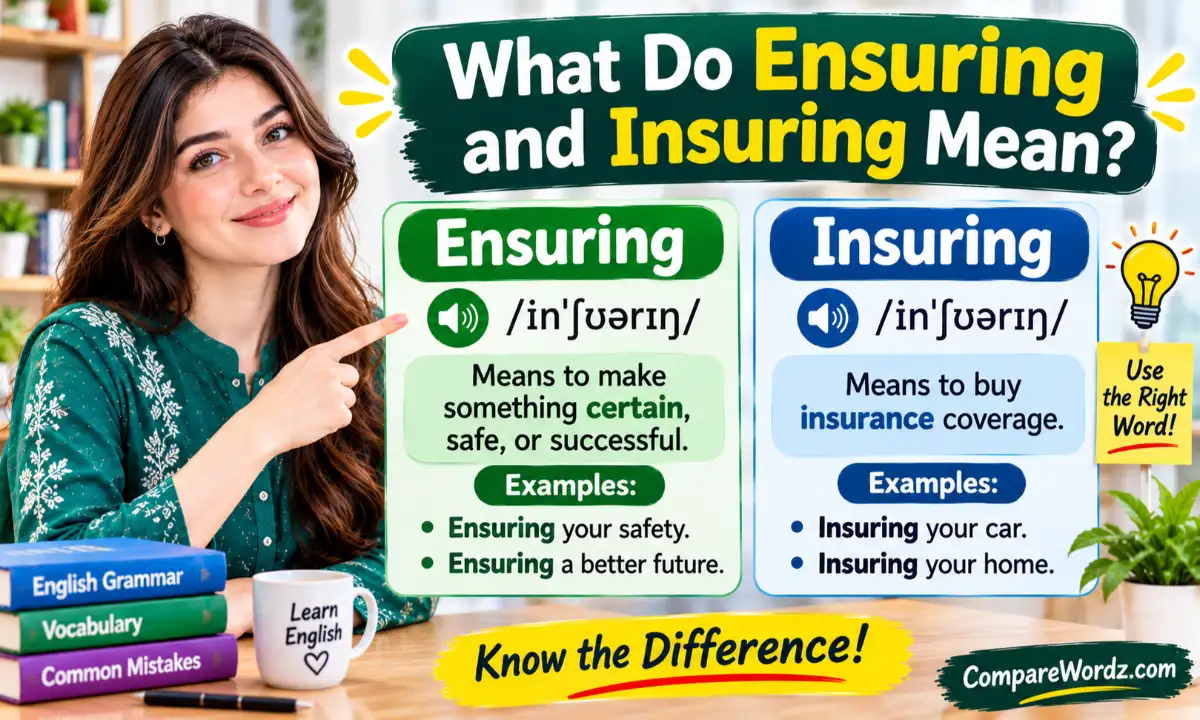
Both words are the -ing forms of verbs. According to Merriam-Webster, ensure means to make sure, certain, or safe, and insure means to provide or obtain insurance on or for something.
| Word | From the verb | Example |
|---|---|---|
| ensuring | ensure | Ensuring a safe walk home takes good lighting. |
| insuring | insure | Insuring a camera protects it against loss or damage. |
The two were once mostly spelling variants, which is why the line can blur. As Merriam-Webster’s usage guide explains, many guides suggest keeping insure for financial matters. That’s the safest habit today.
For a closer look at the base verbs, see our guide on insure vs ensure.
Quick Checks for Ensuring vs Insuring
Run these in order. Most sentences are settled by the first or second check.
| Check | If yes | Write |
|---|---|---|
| Is there a policy, premium, or coverage? | Yes | insuring |
| Could you say “making sure”? | Yes | ensuring |
| Are you calming a person with a promise? | Yes | assuring |
How to Spell the -ing Forms
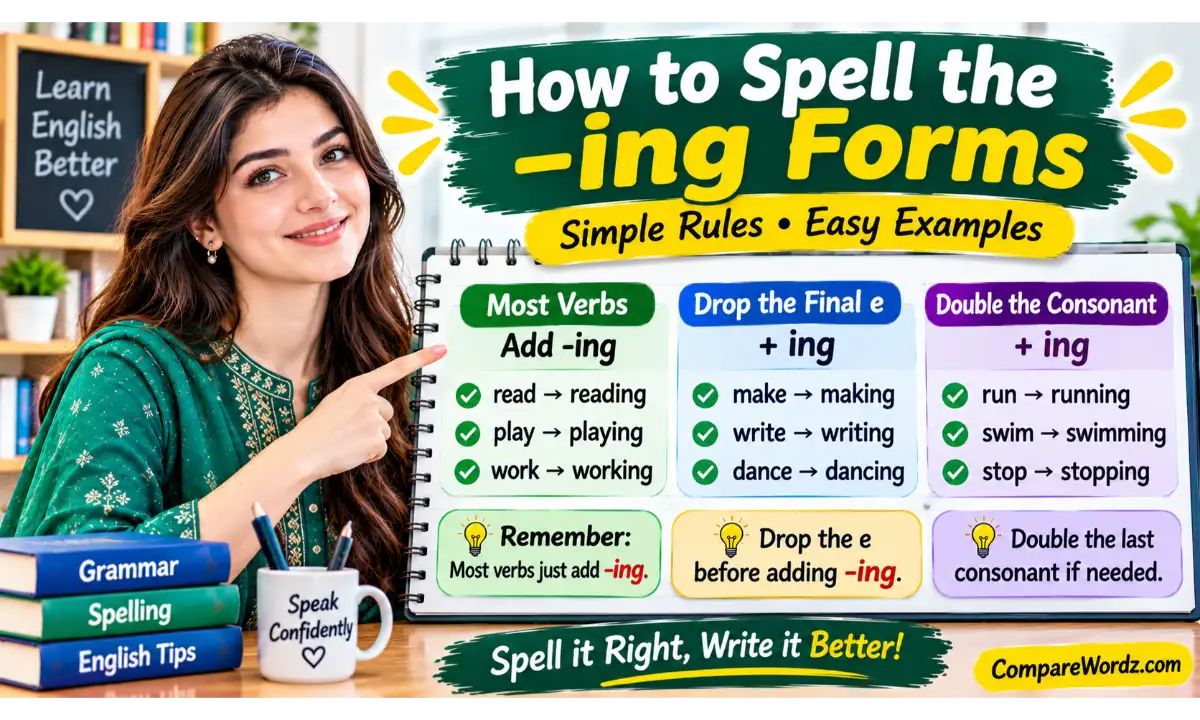
When a verb ends in a silent e, the e drops before -ing. All three verbs follow the pattern.
| Verb | -ing form |
|---|---|
| ensure | ensuring |
| insure | insuring |
| assure | assuring |
Look alike pairs often show up in their -ing forms too, as in accepting vs excepting.
Phrases Where Each Word Belongs
The patterns below show how each word usually behaves in a sentence.
| Pattern | Example |
|---|---|
| ensuring that, plus a clause | ensuring that the file is saved |
| ensuring, plus a noun | ensuring safety |
| insuring, plus the thing covered | insuring your laptop |
| insuring against, plus a risk | insuring against fire damage |
When One Sentence Needs Both Words
Here’s a case in the ensuring vs insuring pair that trips up many writers. A single sentence can involve insurance and still call for “ensuring.”
- Ensuring that your car is insured before you drive is a smart habit.
- The lender is ensuring the borrower keeps the home insured.
In both sentences, the first word means making sure. The second word points to the policy. The topic is insurance, but the action of making certain is “ensuring.”
Common Mistakes With Ensuring vs Insuring
| Wrong | Right | Why it happens |
|---|---|---|
| ensureing | ensuring | The silent e was kept. |
| insureing | insuring | The silent e was kept. |
| Insuring that the door is locked | Ensuring that the door is locked | No insurance is involved. |
| We’re ensuring the building against fire. | We’re insuring the building against fire. | A policy is involved. |
| I’m insuring you it will arrive. | I’m assuring you it will arrive. | You’re reassuring a person. |
Ensuring vs Insuring in Real Life
At work
- We’re ensuring every invoice is approved before noon.
- The company is insuring its delivery vans for the year.
At school
- The teacher is ensuring each student has a seat.
- My parents are insuring my laptop before I move to campus.
At home
- I’m ensuring the oven is off before we leave.
- We’re insuring the house against storm damage.
On social media
- Ensuring this post gets a few likes. 😄
- Insuring my new phone the moment I unboxed it. 📱
Tips for Ensuring vs Insuring Before You Publish
- Check headings and bullets. Short fragments like “Ensuring compliance” hide errors, so give them extra attention.
- Search each form on its own. Spell check won’t flag a real word used in the wrong sense.
- Fix by hand, not by find and replace. Swapping every “insuring” for “ensuring” can break sentences that really are about coverage.
Related Questions
Can a sentence start with ensuring or insuring? Yes. “Ensuring safety comes first” and “Insuring a house can be costly” both work.
Frequently Asked Questions
Ensuring vs insuring: which is correct?
Both are correct words with different jobs. Use ensuring for making sure, and insuring for insurance.
How do you spell the -ing form of ensure?
It’s “ensuring.” The silent e drops before -ing.
What does insuring mean?
It means providing or buying insurance for something.
Can insuring mean making sure?
Dictionaries allow it, but many guides prefer ensuring for that meaning.
Final Verdict: Ensuring vs Insuring
Use “ensuring” when you mean making certain, and “insuring” when a policy is involved. Use “assuring” when you’re comforting a person. Remember that a sentence about insurance can still need “ensuring,” so check the action, not the topic. Take a moment to read the sentence aloud before you decide.
Conclusion
The ensuring vs insuring question comes down to what the word is doing. One makes something certain, and the other protects it with a policy.
Before you send a report or post a page, scan the -ing words and ask which action you mean. It only takes a moment. This article covers word choice only and is general information, not insurance or legal advice.
Last updated: November 2026

Hi, I’m Toseef Mustafa, the creator of CompareWordz.com and a qualified English linguistics professional. My expertise includes English vocabulary, spelling, grammar, word meanings, and commonly confused words. I aim to explain language differences through clear explanations, accurate information, and practical examples. My goal is to help readers understand English better and use the right words with confidence.